Real Feedback From My Pitches To Streamers This Month

I'm back from directing and showrunning my next project with a leading production company in the sports world in partnership with global brand.
I’ve been deeply immersed in production, post, and pitching new projects before the end of Q4.
That’s why I wanted to put together this week's newsletter: to share insights straight from the rooms where ideas and deals are actually happening.
In my recent pitches to brands, production companies, and streaming platforms, I walked away with feedback that’s gold for any filmmaker.
Every insight I got is completely applicable to your own film projects.
In today's newsletter, I’m breaking down the standout points buyers loved, the questions that came up, and how I adjusted my approach.
The difference between this newsletter and others is that you're getting the most up-to-date information that's relevant to the current landscape.
OK let's get into it!
Standout Points That They Loved
Standout 1: Why is this relevant to culture right now?
"Why now" is the most important thing to figure out on any film project.
Buyers want to know that your story feels relevant.
If your concept doesn’t connect to something happening culturally (like trends, headline conversations, or the current zeitgeist) it’s easy for them to pass.
Your takeaway: Think beyond your story itself.
Ask: Why does this matter today?
If you can make that connection, you’re already ahead of most pitches.
Use statistics, news articles, headlines, celebrity culture, university studies, anything that shows your subject matter is on the rise.
Standout 2: Clear stakes
Stakes are everything.
My film projects aren't just about what happens, they're about what’s at risk for the characters, the story, and the world I'm showing.
Make sure the stakes are clear and immediate, whether they’re emotional, personal, or competitive.
Keep the consequences front and center.
Your takeaway: Without stakes, there's no reason to root for your character.
Spell it out.
Be explicit and don't assume your audience already knows what's up.
Standout 3: A, B, C storylines
Pitches can feel confusing if they’re not structured clearly.
Using this A, B, C storyline framework can make all the difference.
In one of my most recent pitches, the A, B, C storylines are as follows:
A. Competition
B. Personal journeys
C. Cultural context
Obviously, I added color and specifics to each storyline.
But I always start by simplifying them to their most basic form, then build from there.
This gives buyers a clear roadmap of what to expect.
From there, we rooted each season in tentpole competitions, which is a common way to create episodic structure in sports docs.
We also highlighted flexibility and seasonality.
The story could evolve with new characters, new locations, or emerging storylines while staying true to its core identity.
Your takeaway: Even if your story has many layers, framing it as simply and digestibly as possible gives clarity.
You can tap into the A, B, C framework can help make your pitch both structured and easy to follow.
The Biggest Question I Got
As you know, I primarily work in the sports doc world.
In these pitches, the sports we’re covering are more complex than traditional ones, so many questions came up about how they work and what it takes to reach the top.
We explained, and answered the questions.
No problems.
However, in my debrief with my creative partners, including a top talent agent and celebrity client, the feedback came up again.
I thought: what's a better way to get ahead of the question and show how these sports work, not just explain?
It reminded me of a YouTube video I came across that explained professional soccer levels, training, and how players go pro.
The point was to educate and also show how difficult it is to make it to the top.
This is the graphic:
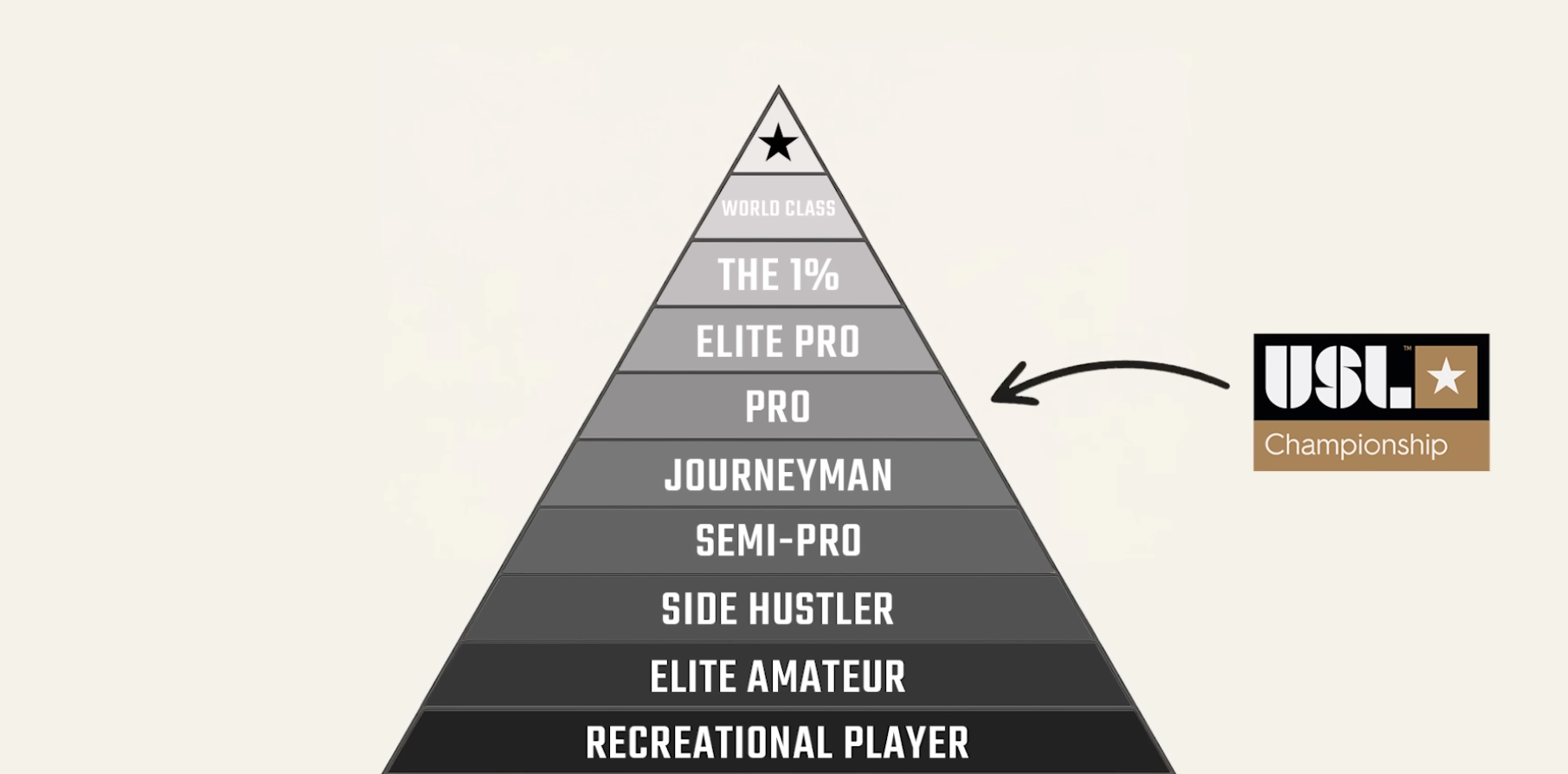
So I pulled inspiration and created new slides to add to our pitch materials.
The new slides are more detailed than the soccer example, but the main idea stays the same.
In the next pitches, there were no questions, the buyers just got it.
Just like that, a small adjustment made a huge difference.
Lesson for filmmakers: Anticipate what your audience doesn’t know and make it easy to understand.
It could be a chart, a visual timeline, or whatever makes your story accessible.
Summary
Filmmaking isn't about knowing all the answers or thinking of the right way to do things.
It’s a new world and the traditional way of thinking isn't the only way anymore.
I find the balance by sticking to the industry standard when necessary but not being afraid to reinvent the wheel a little bit.
Thinking outside of the box to create more clarity in my film projects has never steered me wrong.
Standout 1: Make your story culturally relevant.
Standout 2: Highlight the stakes clearly.
Standout 3: Break your story into an A, B, C storyline.
